Bosco, Age 25 (A pseudonym has been used and his photo is omitted because of the sensitive nature of this story)
“Tell the world, so they may hear our voices and help us,” Bosco told me as he shook my hand and began to stand up from his seat at the interview table. I took a deep breath, making a concerted effort to contain my emotions. I thanked him for his willingness to share, and forced a smile when I wished I could offer a hug to him and the several other youth I would talk to over the course of the day.
------------------------------------------------------------------------------------------------
When I was twelve, I was awoken one night by the sound of angry voices outside of my hut. A man with a gun forced his way inside and ordered my two older brothers and me to march into the bush. With the sounds of our mother wailing behind us, we disappeared into the tall grasses surrounding our family’s compound, each carrying upon our heads the massive load of cargo we had been given by LRA fighters.
By the early hours of the morning, tiredness overcame my two brothers. When one whispered to the other that he could not go on without rest or water, a commander spoke up: “it looks like two people among us need to be laid to rest, for they have shown they are too tired. Kill them!” I looked away, as my two siblings were beaten and then cut to death.
As the brigade moved on, we spotted another homestead. “Now it is time to see if you have the strong heart of a soldier,” my commander told me. I stood at a distance as other boys were sent in to raid the group of huts. Within minutes, they returned with a man—about forty years old, by the looks of him. I was ordered to beat him to death with a stick. At first, I wanted to refuse, but I knew what would happen to me if I did.
After a while, we left our homeland behind, escaping Ugandan government forces and finding refuge in Sudan. In the land of the Dinka [the cattle herding warrior people of Southern Sudan], we struggled to survive. Hunger and thirst were everywhere. Many boys died and I was sent with eighteen others to loot a Dinka encampment for food. We knew the order would result in a fight.
As we approached the Dinka’s mud brick settlement, gunfire rang out from in front of us. Eleven of the boys were killed and the rest of us fled in all directions from the soaring bullets.
Eight of us returned to our camp with no food. Six had lost their guns in the process, and were ordered by our commanders to be killed for the mistake. I escaped death only narrowly by agreeing to join a brigade returning to Uganda.
My new company received strict orders from Joseph Kony [the LRA’s mystic leader]: “when you reach Uganda, anything that is found living should be killed.” Under this command, we gathered and murdered one hundred thirteen civilians as we marched from Gulu to Pabo Sub-county.
The killings in Pabo were the final straw for me. I became quiet, distant, and unresponsive. My superiors noticed my changed behavior and commanded me to eat from the flesh of our next abductee so I could gain the strength of two men. I was spared this fate when another commander decided this would take too much time. Instead, I received 100 strokes and marched on.
I knew that night, I must escape. I no longer feared death and knew I could not continue as I was.
In the middle of the night, I faked the need to use the restroom. I grabbed my gun and thirty-two bullets, and set off running into the bush.
Six soldiers chased after me. When I had gained some distance, I climbed a tree, grabbed my gun and shot the rounds until each of the six fell below the grassline.
I threw my weapon and prayed I would never use one again. I found a shallow well nearby and crawled within, waiting quietly for sunrise.
Local leaders received me with apprehension, turning me over to the Ugandan government’s army. After being handed from one barracks to another, I was finally reunited with my parents after five years in captivity.
My happiness and newfound freedom lasted only a short while. Days after returning home, I was in town when members of the LRA went to my homestead looking for me. When they didn’t find me there, they killed my father and left my mother badly beaten and unconscious.
My road to recovery has been long. Some people in town bully and torment me, telling me to call on my dead father for help, or fight back like I would have done in the bush.
After the death of my father, I lost all hope to live. I preferred to remain quiet, spending most of my time alone… until I heard of the Acholibur Peace Club.
I wanted to know peace myself and to create it for others. Now, when I start to feel un-free, burdened by anger or sadness, I go to the Peace Club. It is helping me forget about my past experiences and create a new life rooted in peace.
Members of the Peace Club helped me talk to my mother. Now, we understand one another and have a good relationship.
We [child soldiers] lost out on our education along with our youth. Without skills, we will always be poor.
My story is really like so many others. Around here, you will hear the same thing over and over again. The youth need the world’s support so we can continue our educations and work to rebuild our lives.
Saturday, February 11, 2012

“I Miss Their Love More than Anything”: A War Orphan and her Family
Susan, Age 17
 When I was only seven, both of my parents were killed by the LRA. My father was a teacher back then, and someone told the militia that my family would have money. They came to our home in the middle of the night and demanded all the money we had. At the time, there was nothing there for them to take, so they killed my father. They decided to abduct my mother and gave her a heavy load to carry. She wasn’t strong enough, so they cut her in two pieces and left her to die.
At first, I was given to my maternal uncle to be cared for, but after he became sick and died, I was given to the wife of my paternal uncle. Life was so hard with my “stepmother.” She had many of her own children to care for and could not support my siblings and me.
At 16, I became pregnant. The father promised to care for me and my baby, but then vanished. Around the same time, my stepmother sent my siblings and me away from her home.
Now I am on my own to care for my one year old child and my three siblings. The second born in my family used to help me with the chores like gardening, but he recently died. Life is so hard. My younger siblings are still in primary school, but are often sent home because we cannot find the money to pay the PTA [parental contribution] fees.
My main support comes from the Peace Club where I have received psychosocial counseling and sometimes am given a small sum of money to help me with expenses.
The worst experience of my life has been missing the love of my parents. There has been so much discrimination against me since they died. I miss their love more than anything.
Living with HIV-Infected Parents
Brenda, Age 16

My family struggles because of HIV. Both my mother and father have the disease. We are peasant farmers, but with my parents weak and sick all the time, we often don’t produce enough for a surplus.
School fees are a big problem. Most terms, I talk to the head teacher at my school so that I can pay my fees bit by bit [rather than at the start of the term]. My head teacher is understanding, and usually allows this, but by the end of the year, we often haven’t made the full payment.
When my parents are sick, there is much more work to do at home. I am the oldest, so I need to take care of the younger children. I also have to tend our crop and cook, so my education is not always the priority.
There is an uncle who sometimes helps when my parents need to go to the hospital, but now he is sick too.
Most of the community is supportive of my family. At times, neighbors will fetch water when I am in school so that my parents have enough to drink.
Last year, we were given two goats as a form of livelihood support from an NGO. The goats produced twins. When these goats multiply again, we will sell one to help pay school fees. With my parents sick, I make the goat rearing and business decisions for my family.
There are very many families like my own in Northern Uganda who need assistance because of HIV/AIDS. I am so grateful for the little support we’ve received so my siblings and me can go to school.
At 13 Years Old, I Decided I Had to Leave
Concy, Age 16

The LRA [Lord’s Resistance Army] killed my parents when I was seven. My father was a simsim farmer. He used to sell his harvest for good money. Someone told the LRA that he was a man with good profits, so one day, they came to our homestead. The militants demanded our money and my father gave it to them. They said they wanted more, but there was no more. The last I saw of my parents was both of them being taken into the bush by soldiers. There, they killed them.
For some time, I was taken care of by my grandmother. When she passed away, I was sent to live with my father’s sister. My auntie was burdened with many children of her own and did not have the ability to care for me. She used me mostly for labor. For a while, we were living in a [internally displaced people] camp. Whenever there was a need to collect food, she would send me, knowing that it was very dangerous. There were times that I would see the militia on the road to our family’s plot. I would hide when I spotted them, but I was always so afraid they would find me.
Once we left the camp, the discrimination didn’t stop. The other children in the household went to school and would receive clothes, and I received nothing. I would be given the leftovers of the food the others ate--which was very little--and had to eat alone while the others ate together.
At 13 years old, I decided I had to leave. I planned to find myself a husband to support me.
I found a young man who was 16 and agreed to live with me. He was formerly abducted and lost both of his parents as well. He has given me two children already, but one died.
When my uncle came to collect the dowry [to make our marriage official], my boyfriend’s family refused, so we are still not married.
My boyfriend received vocational training as a driver [from a reintegration center catering to formerly abducted youth], but hasn’t been able to find employment. We tend our own plot, but the food is often not enough to feed our family. We also work in others’ gardens to help us make a little extra money for things like medical expenses.
The Peace Club has helped us a lot in times of difficulty. They have provided me with counseling when I needed it. I also enjoy participating in the dance and drama activities as a way to relieve stress. The Club has also given my family small amounts of money when we are faced with an urgent need, like my child’s medical expenses. They are like family to me, which I do not have.
Saturday, January 21, 2012
Camping Under Serengeti Stars
If Ngorongoro was a bowl filled to the brim with wildlife, the Serengeti is an immense pantry with the greatest assortment of flavors, but only for those who know where to look.

The grasses in the Great Plains stand five feet tall in some places, providing the perfect shelter for grazing animals to hide from view. Compared to the other parks of Northern Tanzania, this made viewing the animals relatively difficult, resulting in only a few sightings per day rather than the near constant stimulation elsewhere.

Though animals are harder to spot, the sights to be seen in the Serengeti are not replicated anywhere else in the world. Sizable prides of lions rest effortlessly within the grasses, stomachs full from their plentiful selection of prey. A glance up at an Acacia may satisfy the onlooker with branches swaying from the weight of leopards. In one tree, I saw three, including a young cub. While books claim Lake Manyara National Park is the only place in the world for spotting tree-climbing lions, I had the fortune of witnessing this rare site in a lone tree of the vast Serengeti plain.

I’ve never been so excited to sleep as I was at the prospect of camping in the Serengeti. Using a new tent with entirely translucent walls, I was prepared for exciting nights of stargazing and animal watching. At one campsite, dusk brought a herd of running giraffes through the camp. At another, elephants drank from the waterspout at dawn.
I imagined the night like a childhood slumber party: giddy with anticipation for what surprises my sleep-mates might share. I went to rest beneath the brilliant starry sky, and drifted off to the lullaby of buzzing insects and the faint sound of nocturnal animals in the distance. After long days of game driving, I have never slept so well, at peace in the middle of the wild Serengeti.

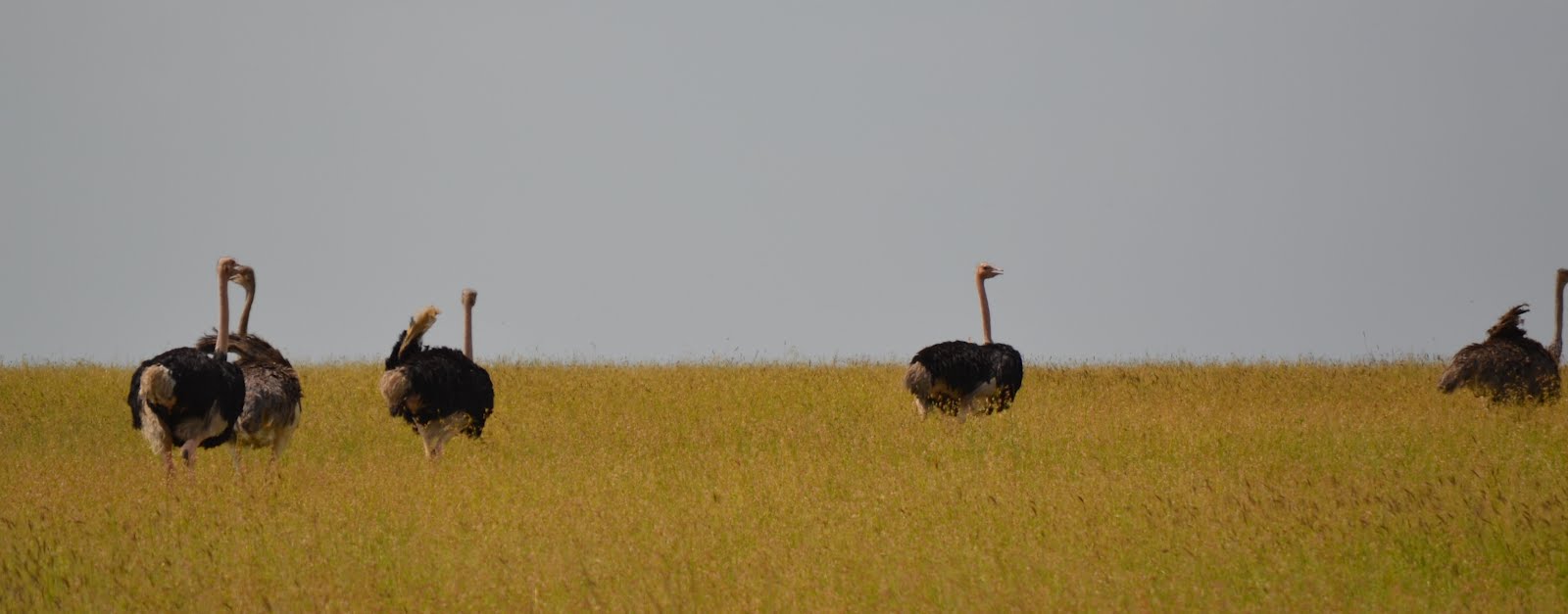
The grasses in the Great Plains stand five feet tall in some places, providing the perfect shelter for grazing animals to hide from view. Compared to the other parks of Northern Tanzania, this made viewing the animals relatively difficult, resulting in only a few sightings per day rather than the near constant stimulation elsewhere.

Though animals are harder to spot, the sights to be seen in the Serengeti are not replicated anywhere else in the world. Sizable prides of lions rest effortlessly within the grasses, stomachs full from their plentiful selection of prey. A glance up at an Acacia may satisfy the onlooker with branches swaying from the weight of leopards. In one tree, I saw three, including a young cub. While books claim Lake Manyara National Park is the only place in the world for spotting tree-climbing lions, I had the fortune of witnessing this rare site in a lone tree of the vast Serengeti plain.

I’ve never been so excited to sleep as I was at the prospect of camping in the Serengeti. Using a new tent with entirely translucent walls, I was prepared for exciting nights of stargazing and animal watching. At one campsite, dusk brought a herd of running giraffes through the camp. At another, elephants drank from the waterspout at dawn.
I imagined the night like a childhood slumber party: giddy with anticipation for what surprises my sleep-mates might share. I went to rest beneath the brilliant starry sky, and drifted off to the lullaby of buzzing insects and the faint sound of nocturnal animals in the distance. After long days of game driving, I have never slept so well, at peace in the middle of the wild Serengeti.

The Bowl of the Earth: Ngorongoro Crater

Imagine a massive bowl created to preserve all of nature’s precious beauty with inescapable ceramic curves to keep intruders out and protect the prized contents.
Ngorongoro Crater is such a place, both a geological and natural wonder. About 2.5 million years ago, a volcano taller than Mount Kilimanjaro erupted, causing the top of the mountain to collapse inwards. The lasting crater is the largest caldera in the world, surrounded by high mountainous walls serving as a natural enclosure for a rich diversity of wildlife.
The descent into the crater takes about an hour, winding down steep roads, first through rainforest, and then through large groves of flat acacia trees. Below, sprawling savanna grassland and alkaline lakes welcome a dense concentration of Africa’s most famous wildlife.
I arrived early in the morning, in time to witness a spectacular sight of migratory Abim stork taking flight from around a herd of zebra. The early morning soft blue haze created a silhouette backdrop for the storks circling above and the stately black and white zebra below.

I spotted seven lions during my stay in the crater, some languidly resting off in the distance, others pacing just outside our vehicle. The regal males with their crowning gold manes reflecting the afternoon light matched only the majesty of the lone elephant, wandering at a distance with a backdrop of verdant rainforest and dark black clouds gathering above.


Ngorongoro is nature’s diamond, a miraculous place deserving as much recognition as the vast Serengeti. In a relatively small land area of 100 square miles, viewers enjoy as many different types of animals as one could see in the world's best zoos.
"Zoo, zoo, zoo!" Lake Manyara National Park
Driving through the Tanzanian countryside on my way to Lake Manyara National Park, I remembered how my brother used to sit in the back seat of my family’s station wagon chanting “zoo, zoo, zoo,” as if it were his own calming mantra. The truth is, we both loved the zoo. My parents bought season passes each year which allowed us unlimited visits to the San Diego Zoo and Wild Animal Park. My grandparents, aunt, and uncle would all entertain our imaginations as we crawled through the plastic termite mounds, explored the canopy from the Skyfari, and insisted on taking the monorail several times around the simulated safari park.
As I prepared to enter my first real safari park in Northern Tanzania, I fondly reminisced, appreciating the care my family took to make my brother and me curious about the world surrounding us.
The “real deal” is even cooler than I imagined. Standing out of the popped-roof of the 4x4 safari vehicle, the wind blew through my hair, leaving a sweet fragrance like a bike ride through southern honeysuckle.

In only a few hours, I saw hippos, giraffes, a large herd of migrating wildebeest, warthogs, monkeys, zebras and baboons. The black mamba snake which crossed my path—one of the deadliest in the world, killing a human in only 15 minutes—tied with the adorable baby blue monkey for my favorite animals of the day.

Safaris bring even their oldest guests back to childhood, wide-eyed and in amazement of the world surrounding. At once, I was six again, climbing through those termite mounds, chanting “zoo, zoo, zoo” to the driver in front of me.
Subscribe to:
Posts (Atom)